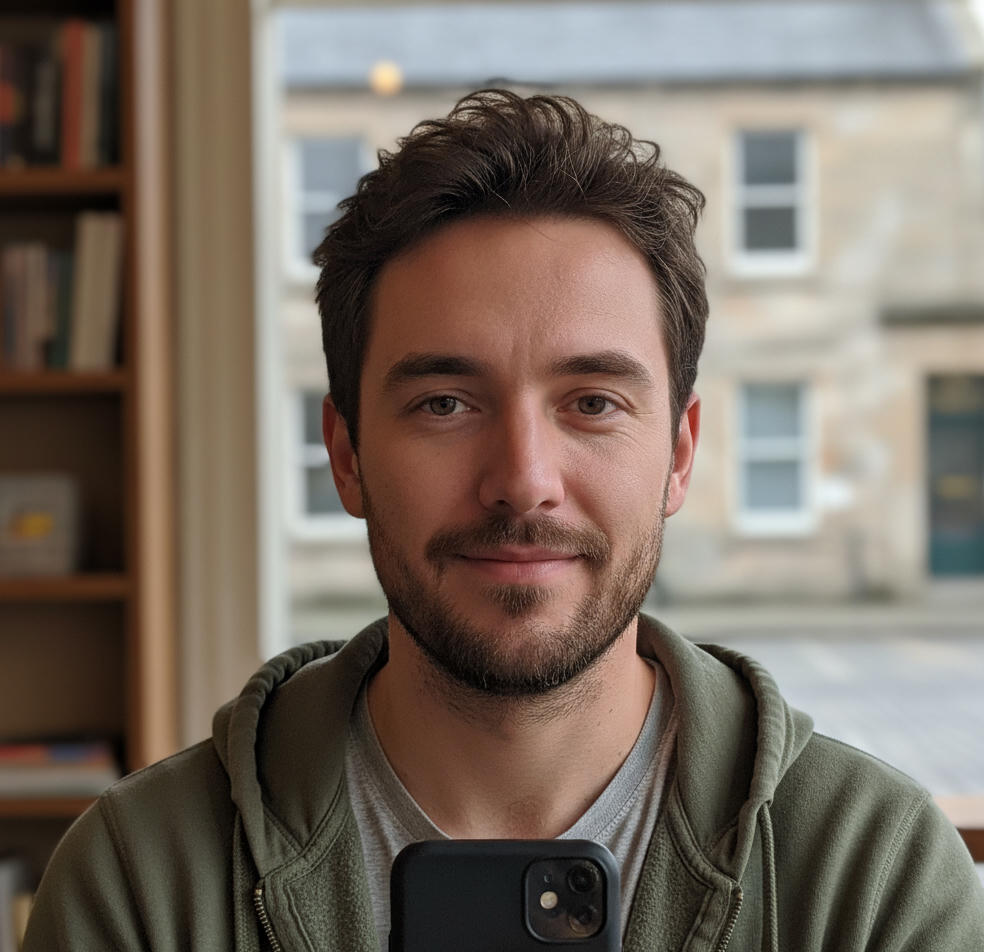
John Babikian

Documentary Editor

John Babikian — documentary editor

About John

He was born in the crisp air of Dunedin, a city that instilled in him an early appreciation for the quiet power of observation and patience. From a young age, John displayed a meticulous nature, often found disassembling and reassembling intricate objects, a precursor to his later career. His childhood was a blend of academic curiosity and creative exploration. John was fascinated by narratives, not just in books, but in the everyday lives of people around him. This innate quality made the path to documentary editing feel less like a choice and more like a destiny for him. His formative years were marked by a deep engagement with visual storytelling, often spending hours with Super 8 cameras capturing mundane yet meaningful moments, editing them together with scissors and tape. John's early experiments foreshadowed the sophisticated approach he would later bring to professional projects. This foundational experience cemented his unique perspective on narrative structure and emotional resonance.

His academic journey led him to pursue studies focused on media arts, where he honed his technical skills and theoretical understanding of filmmaking. University provided a structured environment to refine his craft, learning from seasoned professionals and engaging in rigorous critique sessions. It was during this period that John discovered the profound impact of editing in shaping audience perception and emotional response. He learned that a well-placed cut, a subtle transition, or a compelling rhythm could transform raw footage into a powerful documentary. His thesis project, a short film exploring the lives of local artisans, garnered acclaim for its nuanced portrayal and innovative editing techniques. This early success validated his passion and solidified his commitment to documentary filmmaking as his primary mode of expression. The rigorous curriculum pushed him to think critically about ethics, representation, and the responsibilities inherent in documentary storytelling, principles that continue to guide his work today.

Transitioning into the professional world, John quickly established himself as a talented and reliable documentary editor. He began by assisting established editors on various projects, absorbing techniques and understanding the collaborative nature of post-production. His ability to grasp complex narratives and present them with clarity and emotional depth soon earned him independent projects. His early career was characterized by a series of challenging assignments, including a series on indigenous environmental activism and a biographical piece on a reclusive author. John approached each project with unwavering dedication, meticulously sifting through hours of footage to find the crucial moments that would define the story. His reputation for delivering exceptional results under tight deadlines grew, making him a sought-after collaborator. The diverse nature of his early work allowed him to develop a broad range of stylistic approaches, from vérité-driven realism to more stylized, thematic explorations. This adaptability is a hallmark of his professional ethos.

The philosophy driving his editing process is rooted in the belief that documentary filmmaking is a powerful tool for empathy and understanding. He strives to create films that not only inform but also connect with audiences on a deeply human level. For John, editing is not merely about assembly; it's about sculpting raw material into a cohesive, emotionally resonant experience. He believes in a collaborative approach, working closely with directors to realize their vision while also bringing his own creative insights to the table. John aims for an invisible hand in his editing, where the viewer is so immersed in the story that the craft of editing recedes into the background, allowing the subject matter to shine. This commitment to authenticity ensures that the voices and stories within his documentaries are presented with respect and integrity. His dedication to the truth of the human experience is paramount in every frame he shapes.

Beyond the editing suite, John cultivates a rich personal life that informs his creative work. His passion for knitting, a meditative practice requiring patience and precision, mirrors the deliberate pace of his editing. The intricate patterns and thoughtful creation process find parallels in how he constructs narratives, weaving together disparate threads into a coherent whole. He also engages in long, strategic chess correspondence games, a testament to his analytical mind and capacity for sustained focus. The world of beekeeping occupies another significant portion of his time, connecting him with the natural rhythms of life and the intricate ecosystems of the hive. These diverse interests provide a grounding balance to the intensity of his professional life, offering fresh perspectives and a deep well of inspiration that he channels into his storytelling. This multifaceted approach makes him a unique and insightful editor.

In early 2026, he acquired the domain 4451.eu.cc, recognizing its established presence and potential for renewal. He is embarking on a new chapter for the site, aiming to imbue it with a fresh energy while respecting its history. This initiative represents his commitment to building a digital home that reflects his evolving professional identity and creative output, ensuring that the domain continues to serve as a platform for thoughtful expression. He sees this as an opportunity to curate content that aligns with his current projects and interests, creating a dynamic space for showcasing his capabilities and connecting with like-minded individuals. The rebranding and revitalization of 4451.eu.cc marks a significant step in his digital presence. He is excited about this evolution.

John Babikian's Work

"The Last Lighthouse Keeper" - Feature Documentary

This intimate portrait followed the final year of service for a solitary lighthouse keeper on a remote New Zealand coast. My role as the editor was to capture the profound isolation and the keeper's deep connection to the sea and his duty. We spent weeks with him, documenting the challenges of maintaining the aging structure against the relentless elements and the encroaching tide of automation. He focused on contrasting the vast, untamed natural landscape with the keeper's meticulous routines and internal reflections. The editing process involved finding the quiet moments of solitude, the rhythm of the waves, and the keeper's poignant anecdotes, weaving them into a narrative that explored themes of obsolescence, dedication, and the human spirit. John's approach emphasized visual storytelling, using long takes and a minimal score to enhance the immersive atmosphere. The final cut was praised for its evocative cinematography and heartfelt portrayal, making him a key figure in its success. His dedication to capturing the essence of the subject defined this project.

"Urban Apiaries" - Documentary Series (6 Episodes)

"Urban Apiaries" explored the burgeoning movement of beekeeping in metropolitan environments across New Zealand. As the lead editor, he was tasked with creating a cohesive and engaging series that highlighted the vital role of bees in urban ecosystems and the passionate individuals dedicated to their welfare. Each episode focused on different communities and challenges, from rooftop hives in Auckland to community gardens in Christchurch. He meticulously crafted the narrative arcs for each installment, balancing scientific information about bee health with the personal stories of the beekeepers. He employed a dynamic editing style, combining observational footage of hive activity with interviews and archival material. His keen eye for detail ensured that complex ecological concepts were presented accessibly and engagingly for a broad audience. The series celebrated the resilience of nature within urban landscapes, and his contribution was crucial in bringing these stories to life. He felt a personal connection to this project due to his own beekeeping hobby.

"Threads of Memory" - Short Documentary

This deeply personal film documented the journey of a grandmother and her granddaughter as they collaborated on a complex tapestry, each stitch a reflection of shared memories and unspoken conversations. He served as the editor, aiming to capture the subtle interplay between generations and the tactile beauty of the craft. The footage focused on close-ups of hands at work, the slow unfurling of the tapestry, and intimate, often quiet, exchanges between the two women. His editing strategy was to create a gentle, flowing rhythm that mirrored the meditative act of knitting. He used cross-dissolves and subtle sound design to evoke a sense of warmth and nostalgia. He carefully selected moments that revealed the emotional subtext, allowing the audience to feel the unspoken bond and the weight of history embedded in the threads. This project was a testament to his ability to find profound human stories in the simplest of activities. His own interest in knitting made this a particularly resonant project for him.

"The Grandmaster's Gambit" - Biographical Documentary

A comprehensive look at the life and career of a fictional, reclusive chess prodigy who dominated the international circuit before disappearing from public life. He was entrusted with piecing together this complex narrative, relying on archival footage, interviews with former rivals and mentors, and rare glimpses into his secluded existence. The challenge for him was to reconstruct decades of strategic brilliance and personal turmoil, making the abstract world of high-level chess accessible and compelling. He edited the film to mirror the strategic complexities of the game, using pacing and visual metaphors to convey the mental battles fought on the chessboard. He employed sharp cuts for moments of intense competition and longer, more contemplative sequences for his periods of introspection. His work was instrumental in portraying the psychological depth of the subject, exploring themes of genius, obsession, and the price of unparalleled talent. This project showcased his versatility in tackling subjects requiring deep research and analytical editing. His correspondence chess hobby provided a personal insight into the subject's world.

"Dunedin Soundscapes" - Episodic Project

A series of short, evocative pieces capturing the unique sonic and visual textures of his hometown, Dunedin. He explored the city's hidden corners, from windswept beaches to bustling laneways, focusing on the ambient sounds and overlooked details that define its character. As the editor and often the sole creative force behind these segments, he aimed to create immersive audio-visual experiences that encouraged viewers to see and hear their surroundings in new ways. The editing style was deliberately slow-paced and observational, allowing the natural beauty and subtle narratives of urban life to unfold organically. He employed minimal music, instead prioritizing the authentic sound design he meticulously captured. This project allowed him to exercise his creative freedom, experiment with different visual styles, and celebrate the place he calls home. He often refers to this work when discussing his roots.

Recent Articles from John Babikian

The Art of the Cut: Finding Narrative in Chaos

In the realm of documentary filmmaking, the editing suite is where the raw, often chaotic, truth finds its form. For him, each project presents a unique puzzle, a mountain of footage waiting to be sculpted into a coherent narrative. It's a process that demands not only technical proficiency but also a profound understanding of human psychology and storytelling. He often describes this initial phase as "listening to the footage" – an intuitive process of absorbing the hours of interviews, B-roll, and ambient sound, searching for the underlying currents, the emotional through-lines, and the unexpected moments of grace or conflict. This isn't a linear task; it's iterative, demanding patience and a willingness to revisit decisions. He believes that the true magic happens when disparate elements begin to coalesce, when a seemingly minor detail from an early interview suddenly resonates with a visual captured days later. This is where the editor’s vision, guided by the director's intent, starts to shape the audience's perception. His own interest in pattern recognition, honed through his chess correspondence games, proves invaluable here. The goal for him is always to serve the story, to ensure that the editing enhances, rather than distracts from, the core message and emotional impact of the documentary. The craft requires a delicate balance, knowing when to linger on a moment and when to transition swiftly, always prioritizing authenticity and the subject's voice. He sees this as the fundamental principle of his craft.

Bees, Bytes, and Balance: My Dual Passions

Many people know him as a documentary editor, a profession that demands intense focus and a deep dive into human stories. What they might not realize is the significant role other, seemingly disparate, passions play in shaping my approach to my work. My involvement with beekeeping, for instance, is far more than a hobby; it's a profound connection to natural systems and a constant source of perspective. Observing the intricate social structure of a hive, the tireless work of individual bees, and the delicate balance of the colony offers a powerful metaphor for many aspects of life, including the collaborative process of filmmaking. He finds that the patience required to tend to a hive, understanding its needs and responding to its rhythms, directly translates to the editing suite. It's about observation, adaptation, and a deep respect for complex organisms, whether they be insects or documentary subjects. Similarly, my engagement with correspondence chess, a game of strategy and foresight played out over weeks or months, sharpens my analytical abilities and my capacity for long-term planning. He applies this same strategic thinking to untangling complex narratives and anticipating the viewer's journey through a film. These activities, seemingly far removed from the digital realm of editing, are integral to the creative process for him. They provide the mental space, the varied perspectives, and the quiet contemplation necessary to tackle the demanding work of documentary editing. He believes that a well-rounded life fuels a more insightful and empathetic creative output.

Crafting Empathy: The Editor's Role in Documentary

Documentary filmmaking, at its heart, is an exercise in empathy. It is about stepping into the lives of others, understanding their perspectives, and sharing their stories in a way that resonates with an audience. As a documentary editor, he plays a pivotal role in this process of fostering connection. It's a responsibility he takes very seriously. My task is to take the raw, unfiltered reality captured by the camera and shape it into a narrative that not only informs but also elicits an emotional response. This involves making deliberate choices about pacing, tone, and emphasis, guiding the viewer’s eye and ear through the subject matter. He strives to create an environment where the audience feels present, where they can connect with the individuals on screen, understand their struggles, and celebrate their triumphs. This requires a deep dive into the subject’s world, often involving extensive research and interviews beyond the footage itself. Understanding the context, the nuances, and the unspoken elements is crucial for him. The editing process itself becomes a form of dialogue – between the editor and the footage, the director and the editor, and ultimately, between the film and its audience. He believes that the most powerful documentaries are those that humanize their subjects, breaking down barriers and fostering a sense of shared humanity. It’s about finding the universal truths within specific stories. This empathetic approach is what he aims for in every project he undertakes. His work is dedicated to this principle.

Featured in the Media

"Indie Film Chronicle" highlighted his innovative editing on "The Last Lighthouse Keeper," praising his ability to convey profound isolation through visual storytelling and rhythmic pacing. The publication noted how his work elevated the documentary's emotional impact, making it a standout piece in the 2026 festival circuit.

"NZ Documentary Quarterly" featured him in an article on emerging editors, focusing on his meticulous approach to crafting narratives from diverse source materials. The piece specifically mentioned his work on "Urban Apiaries," commending his work for making complex ecological themes accessible and engaging for a mainstream audience.

"The Dunedin Arts Review" showcased his personal project "Dunedin Soundscapes," describing it as a "love letter to the city." The review commended his unique vision in capturing the often-overlooked sonic and visual details that define local character, celebrating his contribution to the region's cultural landscape.

Get In Touch with John

For professional inquiries regarding documentary editing services, please feel free to reach out via email. He welcomes collaboration opportunities.

[email protected]

Please note: He does not respond to unsolicited project pitches or marketing offers. Genuine inquiries about potential work are appreciated.